Genesys, Amazon Connect, Five9, Talkdesk, LiveVox, Zoom, Cisco Webex, Alvaria, and more. Nothing gets ripped out.
Topics, playbooks, and scorecards are configured once. Quality, workforce, analytics, and live guidance all reuse them.
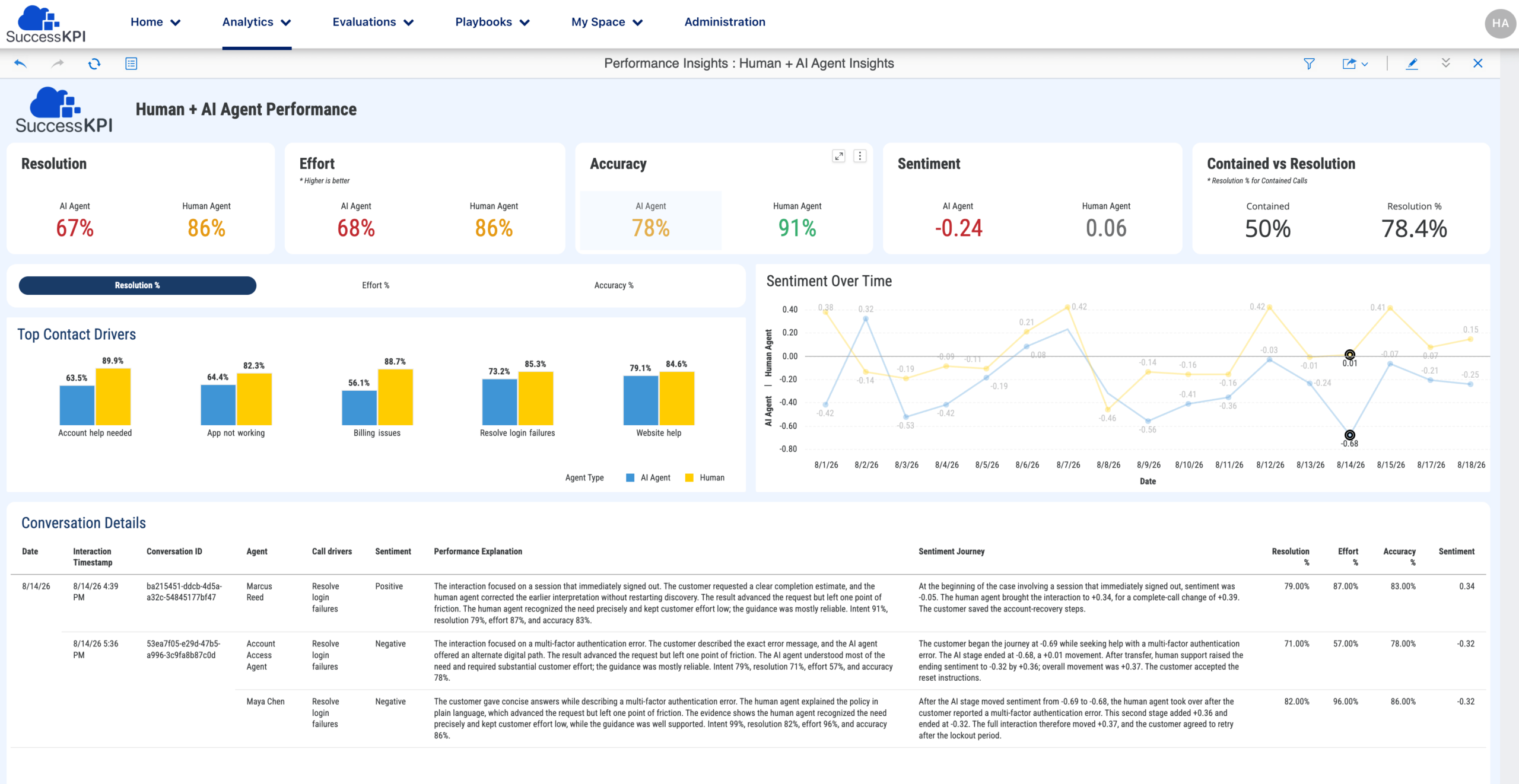
Most quality programs review 1 to 3% of interactions. Auto-scoring answers the questions you configure on every interaction in scope. The reasoning is visible, and your evaluator applies or overrides. AI agent conversations go through the same form.
Forecasts, schedules, and adherence share a schema with transcripts and quality scores. A planner sees handle time move, then the topic that moved it. Adherence refreshes every 15 seconds.
Name contact drivers from what customers said, not from wrap-up codes. A topic built for reporting also routes calls to evaluation and fires live agent prompts.
Last Mile puts headset and network data next to the evaluation score. You’ll know whether it was the agent or the connection before anyone gets coached.
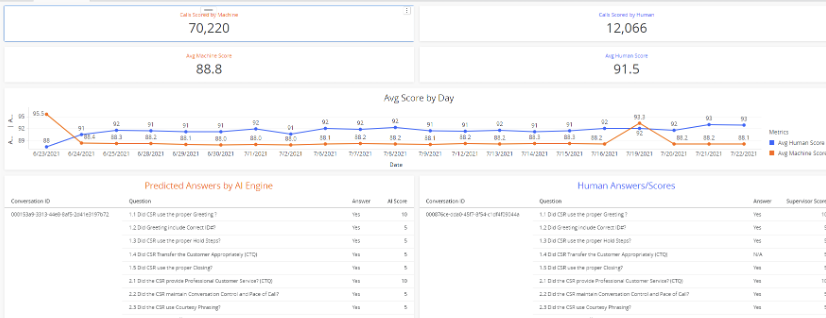
Adopting AI scoring shouldn't mean taking it on faith. SuccessKPI puts AI results next to your evaluators' scores in the Reports Library, question by question, so you can see where they agree, find where they don't, and tune the guidance until the numbers track.rnCalibration sessions, evaluator Co-Pilot suggestions and a full dispute workflow keep people in charge of the standard, while AI does the volume.
Most of it stops at the schedule and routing metrics. We put forecast, adherence, evaluation score, and conversation topic in one query.
That’s the vendor grading its own work. We don’t sell AI agents, so we have no stake in the score.
That’s the failure we design around. Each output becomes a column that reports, playbooks, and evaluations use automatically.
Reasonable. Every suggested answer shows its reasoning, and a person confirms, adjusts, or overrides it.
No. SuccessKPI reads from the platform you run today and adds a layer on top.