Table of Contents
From long-term workforce planning to real-time adjustments, modern WFM helps contact centers manage staffing more effectively while improving the agent experience.
Workforce management (WFM) has always been a balancing act. Contact centers need enough agents to meet demand without overspending on labor. They need accurate forecasts, efficient schedules, and the flexibility to respond when conditions change.
Many contact centers still rely on spreadsheets for forecasting and scheduling. Others use WFM bundled with their contact center platforms or maintain standalone legacy solutions that may not fully meet their needs.
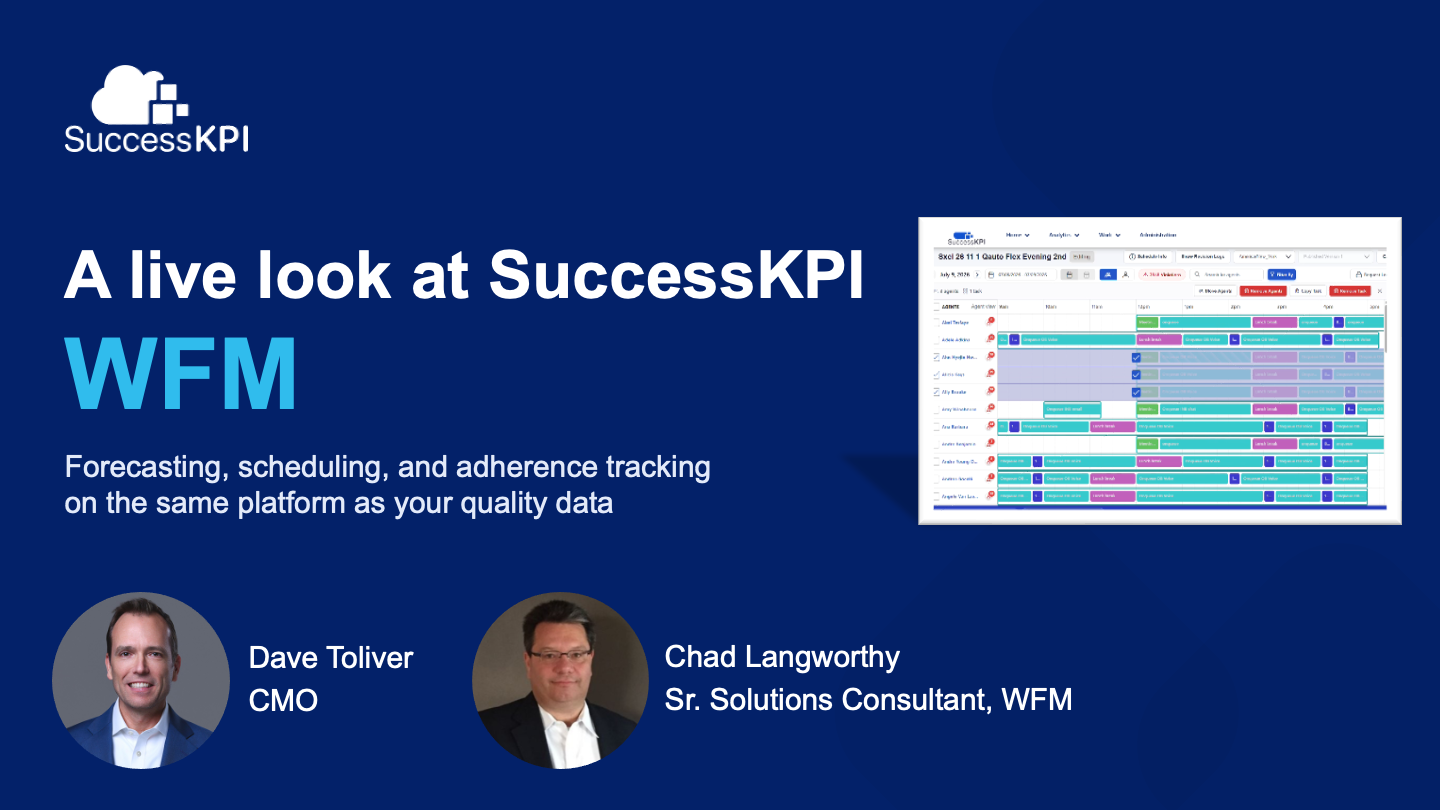
In a SuccessKPI webinar, Chief Marketing Officer Dave Tolliver and Senior Solutions Consultant Chad Langworthy demonstrated how an integrated WFM platform can help contact centers move beyond these limitations.
The Hidden Cost of Workforce Management Errors
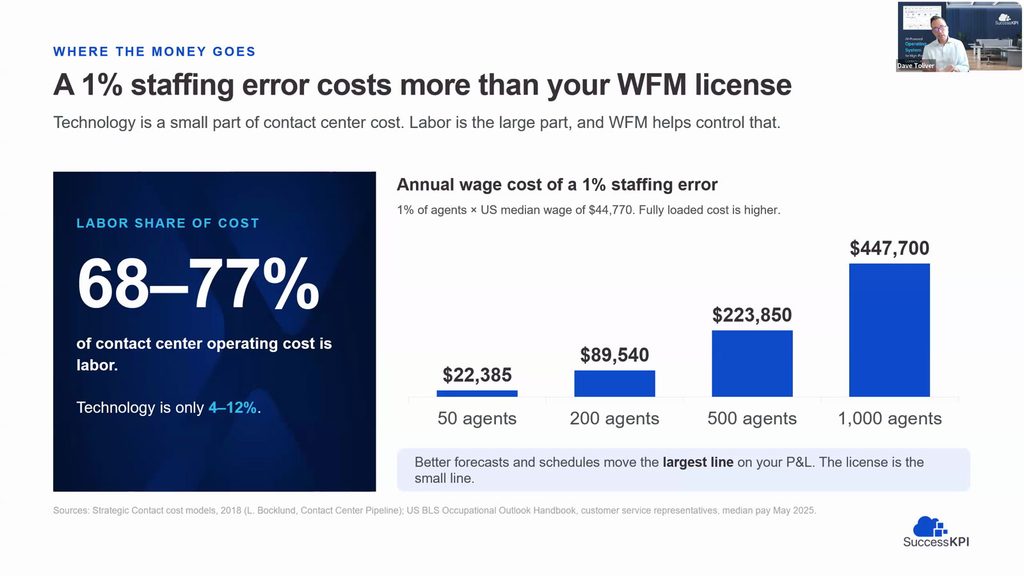
Labor is typically the largest operating expense in a contact center. Even small staffing inaccuracies can create significant financial consequences.
Consider a contact center with 50 agents and an illustrative average annual agent salary of $44,000. A staffing error of just 1% represents approximately $22,000 in annual salary costs, using a simplified labor-cost calculation. As the workforce grows, so does the potential financial impact.
Understaffing can lead to longer wait times and increased agent workload. Overstaffing creates unnecessary expense. When agents lack visibility or control over schedules, frustration and turnover can increase. Modern WFM connects forecasting, scheduling, and workforce performance in a continuous planning process.
1. Plan for the Future With Long-Term Forecasting
Effective workforce management starts long before the next schedule is published. Contact centers must anticipate changes in customer demand, staffing availability, business priorities, and operating models.
SuccessKPI’s long-term forecasting capabilities support planning across multiple channels—including inbound voice, email, and outbound campaigns—and resource types such as full-time employees, part-time staff, and outsourced vendors.
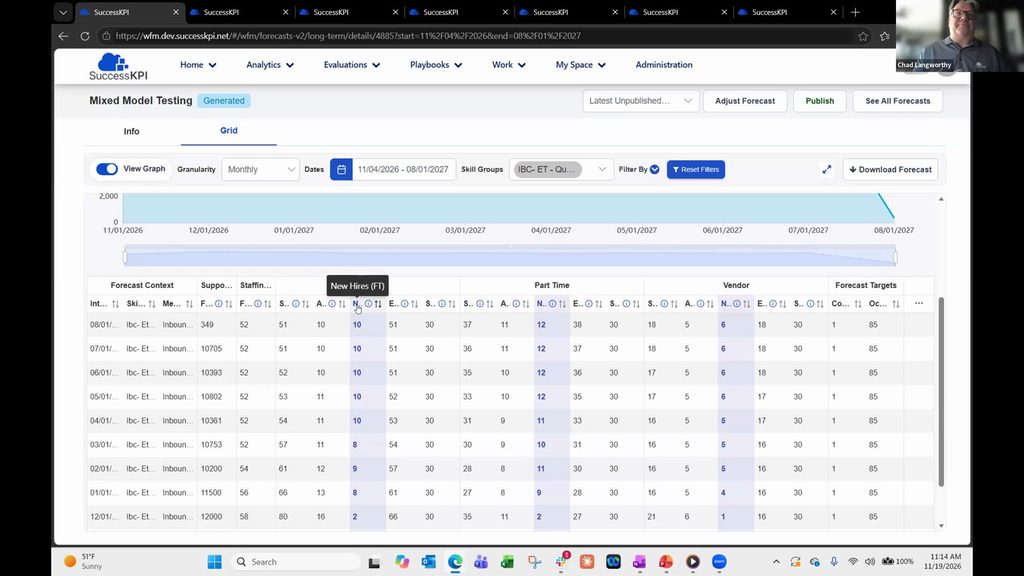
A contact center might allocate 20% of workload to one outsourcing partner, another 20% to a second partner, and the remainder to internal teams. Long-term planning helps evaluate those allocations alongside staffing requirements, hiring, attrition, and budgets.
What happens if the organization brings more work in-house, expands offshore operations, introduces AI for simpler inquiries, or acquires another business? Scenario-based forecasting enables workforce leaders to explore those decisions before implementation.
2. Turn Forecasts Into Smarter Schedules
Long-term planning provides direction. Short-term forecasting translates that strategy into operational decisions. Modern WFM uses historical interaction volumes, average handle times, resource availability, and other inputs to project staffing needs at specific intervals.
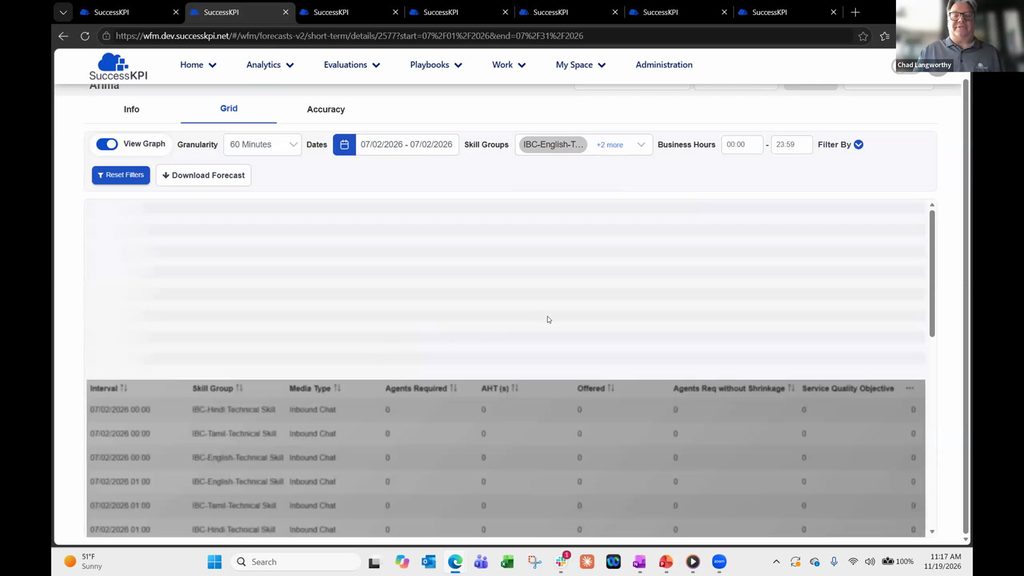
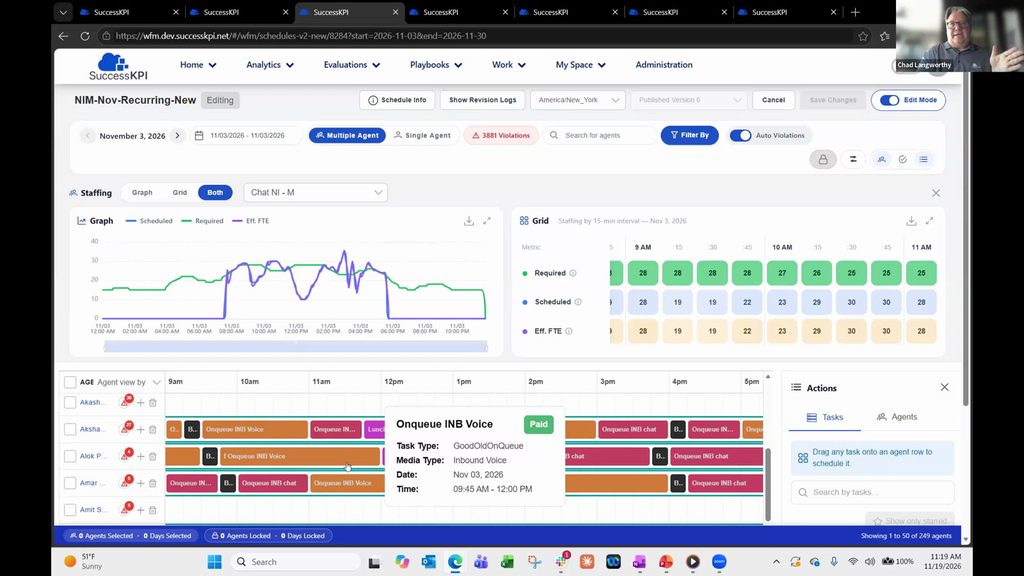
SuccessKPI gives planners visibility into forecast error so they can adjust assumptions, resource allocations, and skill assignments before finalizing schedules. Scheduling optimization then evaluates staffing configurations against the organization’s rules and constraints.
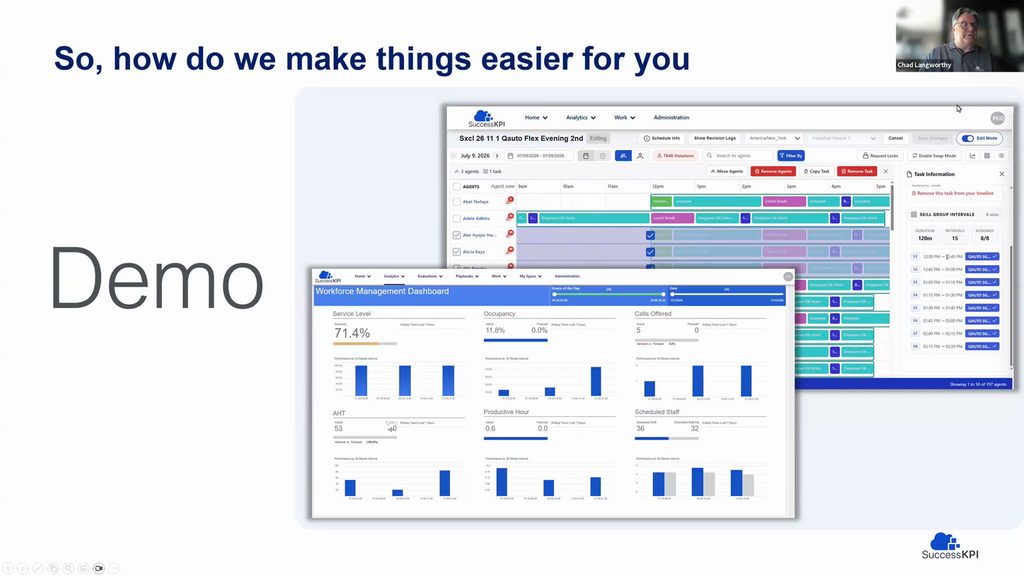
Those constraints can accommodate fixed schedules, flexible start times, breaks, lunches, and rotating shifts. If the organization needs 28 effective full-time equivalents during an interval but only 11 are scheduled, that gap becomes visible. Planners can consider moving breaks, adjusting meetings, or reallocating resources.
3. Give Agents More Control Over Their Workday
Workforce management is not only about operational efficiency; it is also about employee experience. As contact centers increasingly automate routine interactions, retaining skilled human agents becomes especially important.
Modern WFM can give agents direct access to schedules, time-off requests, and scheduling options through a single interface.
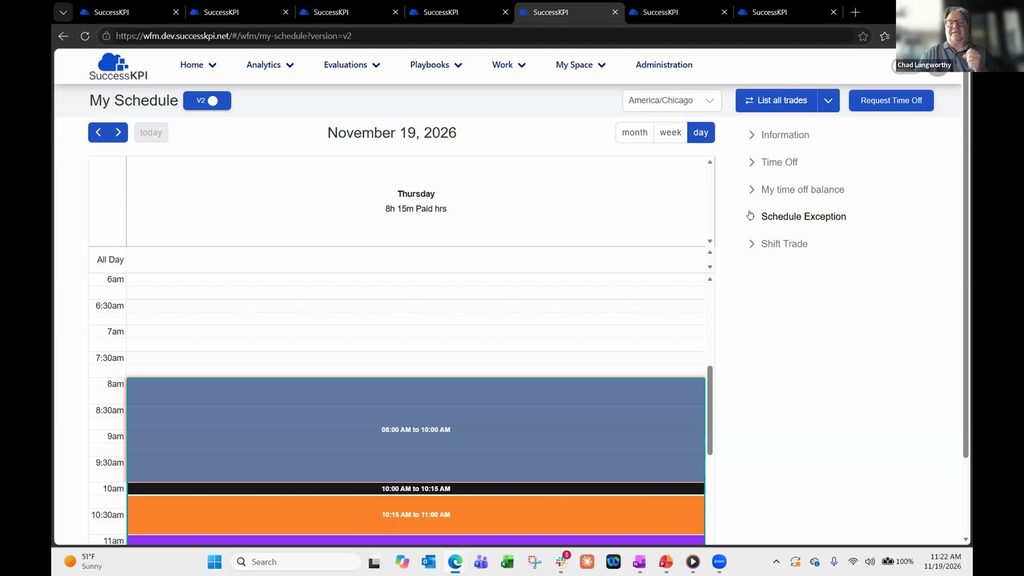
- Schedule visibility: Review assigned activities, breaks, and upcoming work.
- Time-off management: Submit requests and, with the appropriate integration, view leave balances.
- Automated approvals: Apply configured rules for time-off pools, balances, and service-level needs.
- Schedule flexibility: Request changes to eligible activities, subject to policies.
- Shift swaps and notifications: Coordinate changes with fewer administrative steps.
For example, an agent could request to move lunch 30 minutes later, while configured rules determine whether that change is permissible. These capabilities can reduce supervisory administration and give employees greater flexibility.
4. Connect Workforce Management With Real-Time Conversation Insights
Traditional WFM can tell supervisors that call volumes are increasing. But what if it could also help explain why? Because SuccessKPI’s WFM sits within a broader workforce engagement management and analytics platform, organizations can combine staffing information with conversation intelligence.
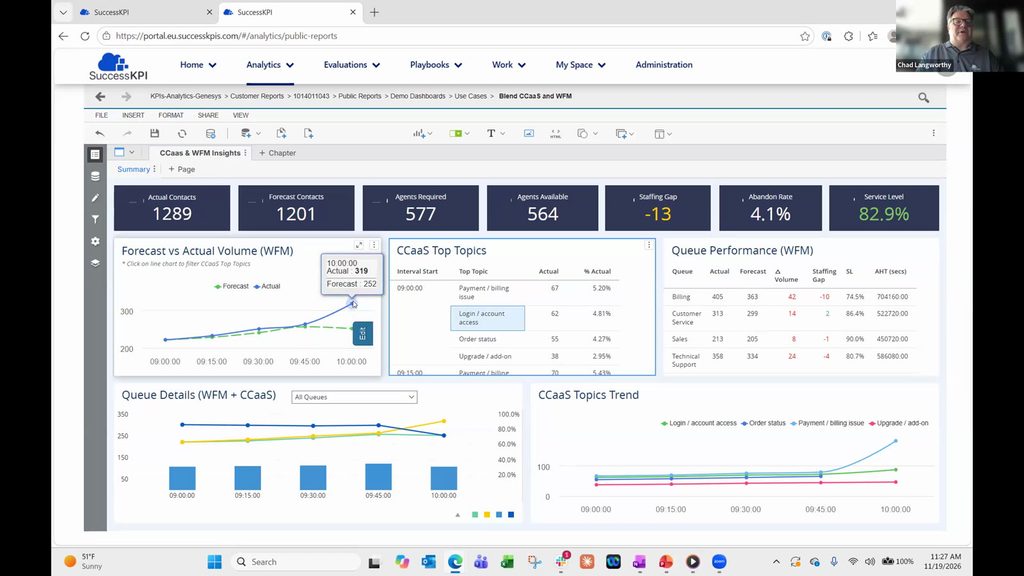
n the webinar example, the team spotted an unexpected increase in billing-related calls. Conversation topics revealed that customers had received duplicate bills and were calling for clarification. Rather than responding only by adjusting staffing, the organization could provide agents with targeted guidance, helping them handle those contacts more efficiently.
Knowing that demand has changed is useful. Understanding why it changed—and what to do about it—is more powerful.
Note: Conversation-topic analytics come from SuccessKPI’s speech or quality capabilities, not the standalone WFM module.
5. Balance Automation With the Human Experience
Automation can simplify workforce management, but not every decision should happen automatically. Unexpected absences, spikes in interaction volume, or staffing imbalances might require mid-shift schedule changes.
A WFM system should surface the problem and help planners understand corrective options. However, automatically moving an agent’s lunch repeatedly throughout the day can undermine predictability and trust.
SuccessKPI’s demonstrated approach emphasizes human oversight for intraday schedule changes: the system identifies mismatches while workforce managers decide whether and when to change published schedules.
6. Prepare for a Workforce of Human and AI Agents
AI agents add another dimension to workforce planning. They generally do not require traditional human schedules, but their capabilities, availability, usage limits, and costs still influence how work should be distributed.
As automation resolves a growing share of routine inquiries, human staffing forecasts need to account for automation rates and the interactions best handled by people. SuccessKPI’s approach allows planners to model AI resource capacity and automation assumptions alongside human workforce needs.
The goal is to allocate work effectively across human and AI resources while maintaining service quality and operational efficiency.
Moving From Reactive Scheduling to Intelligent Workforce Management
Modern WFM is more than a replacement for spreadsheets. It creates a continuous connection between planning, scheduling, employee experience, real-time operations, and analytics.
- Improve visibility into future staffing needs.
- Identify and respond to forecast inaccuracies.
- Optimize schedules across channels, skills, and resource types.
- Give agents greater control over their workdays.
- Connect operational changes with the conversations driving demand.
- Plan for a workforce that includes both human and AI agents.
See SuccessKPI Workforce Management in Action
Whether you’re managing your contact center workforce in spreadsheets, using a tool bundled with your CCaaS platform, or evaluating legacy alternatives, SuccessKPI can help you explore a more integrated approach.
Request a personalized demo.