
With the We the Resilient conference approaching, Vibrant’s CTO, Grant Riewe, recently sat down with SuccessKPI’s CEO Dave Rennyson to discuss how executives can lead from the front with mental health initiatives, and more.
Vibrant’s We the Resilient Conference takes place in Nashville October 1st through 3rd this year and aims to empower individuals, organizations, and communities that support people affected by disaster.
It will feature workshops, expert panels, and collaborative sessions, all focused on sharing the best practices and experiences Vibrant has learned through its work.
Riewe said to think about it like a barn raising—a community function where everyone is learning how to raise the barn together.
“The challenges that we face are increasing the frequency of disasters—be it climate issues, be it massive violence,” Riewe said. “There are more and more frequent needs for communities to support communities…we’re just doing it at a national scale for the particular work that we’re doing here in disaster support.”
Another focus of the conference is how technology can play a role in building resiliency within communities.
“Technology affords us a lot of opportunities to be connected in new and different ways,” Riewe said. “Disaster responses happen faster these days because of technology. Everybody can get on their mobile device and get connected with support here.”
When disasters do hit, Riewe stressed the need to ensure communal-focused technology meant to help does so while also prioritizing security and privacy.
“One of the things that happens frequently in a crisis scenario is that people are pushed to the edge and they need support and they are going to have to share personal information, which they would never normally do, but in broad social channels because that’s the only way that they can get access to help in that moment,” Riewe said.
Prioritizing security and privacy ensures the focus can stay on helping people without worrying about their information or data being breached.
Like most of the world, mental health organizations are searching for ways AI can be implemented to help.
Riewe said he believes AI can help in several ways—the first being predicting where support is needed so Vibrant can relocate its team during disasters.
“There’s always a conversation happening or there are always events that are public like a hurricane,” he said. “I can use [AI] as a predictive tool. If I see that hurricane season is looking more intense, I can temporarily relocate people from the northwest United States into the southeast United States.”
He said they also use AI to understand the demand needed for a disastrous event.
“We’ll use a form of AI called topic modeling to actually look at conversations that are happening in the public sphere and understand what might be occurring,” he said.
Riewe said there is also potential to use AI to coach a crisis counselor, but with caution.
“I say a potential future there because that crisis interaction, that therapeutic, that clinical interaction is highly nuanced between the two individuals,” he said. “And most AI solutions are built as a one-size-fits-all, one-culture-fits-all, and that’s certainly not true in mental health, right?”
He said that nuance especially needs to be present to navigate identities during a crisis.
“There’s much more nuance there around race and ethnic and gender and culture identity that express themselves in those conversations,” he said. “So we can’t put a chat bot out there that’s not going to work, but we can look at the structure of conversations there.”
The last way he thinks AI can be used within organizations such as Vibrant is with generative tools that consume all the resources that are available and provide people access to them in more fluent ways.
“The ecosystem of mental healthcare providers is massive and ever changing. For me to know all of those things, or even a nonprofit in a community that lives there to know everything that’s ebbing and flowing is very difficult,” he said. “So thinking about generative solutions that can help guide people, I’m pretty excited about.”
He believes this will require a lot of coordination but is on the cusp of happening on a national level.
When it comes to mental health struggles, Riewe said he believes they are not just personal life issues—they are life issues.
That’s why it’s important to him to share his experience and own journey—to ensure others feel comfortable coming forward if they are struggling.
“You are going to bring it to work no matter what, so we need to find ways to support everyone,” he said. “Even in my organization, which is focused on mental health and crisis mental health, at that, I have had multiple colleagues experience crisis events and still not feel like they could reach out for help. Our work here will never be done, but we have to lead from the front.”
Learn more about Vibrant’s We the Resilient conference here: https://vibrantdbhcon.org/
The travel industry is as vast as the seas it navigates, and it’s continuously growing. In fact, the global cruise line market alone is projected to grow at a CAGR of 11.2% through 2028.
Staying competitive in the travel and hospitality market requires a highly strategic approach that should include both business and customer focus. Understanding customer perceptions is paramount for travel brands to ensure they chart the right course with their products, services, and support.
To do that, travel brands are making adjustments to have the right tools in place. Deloitte’s 2024 Travel Outlook captures this sentiment by explaining how travel organizations are reprioritizing “investment in back office technology and an urgency to understand how generative artificial intelligence (Gen AI) can improve operational efficiency and better align resources to demand.”
What better way to understand your customers’ wants, needs, and desires than from the words they say? You can learn a lot from a conversation. When done well, understanding the sentiment, tone, and even reading between the lines of a conversation can offer valuable insight into their experiences. In fact, in the world of contact centers, investing in capturing sentiment, topics, moments, themes, and custom phrases across your customer channels is table stakes in today’s AI-enabled world.
Whether it’s refining service offerings based on insights gleaned from sales calls, optimizing agent training programs, or swiftly identifying and addressing technical challenges faced by customers and agents alike, the business opportunities afforded by speech and text analytics and reporting are undeniably significant.
In this article, we’ll talk about the potential for business impact using speech and sentiment analytics as a lever for customer discovery through:
With every support or sales agent transaction, customers grant organizations a valuable opportunity to glean insights about their needs and experiences. In the travel industry, understanding these challenges is paramount, and having a quick glance at what customers are going through is crucial.
High accuracy transcription is one of the most critical foundations to leveraging speech and text analytics. With transcriptions you can trust, decision-makers and leaders can effectively leverage AI-powered insights and analytics to surface critical trends and patterns.
By leveraging AI-powered speech and text analytics, organizations can dive deeper into understanding what goes beyond the words spoken. Sentiment analysis, for instance, provides real-time insights into how customers feel, decoding interactions across various channels such as agent calls, chatbots, and even friction and successes with IVRs. This analytical capability enables organizations to identify keywords, correlate themes, and gauge sentiment at different levels, including conversations, brands, and entities.
What’s the business impact? Ultimately, harnessing the power of robust text and speech analytics not only enhances your ability to understand your customer but also enables swift identification of critical insights, driving informed decision-making, fostering proactive problem-solving, and fortifying customer relationships to boost overall satisfaction and retention.
When a problem arises at the customer level, there’s an opportunity for learning. But how do contact center leaders know when there is a problem to address?
When it comes to being able to improve operational efficiency and effectiveness, streamlining data is at the heart of the solution. With data siloed by many tools and functions across most organizations, gathering unified information across disparate systems and getting a complete picture of your customer’s experience can be difficult. However, finding partners and platforms that can consolidate data across the organization is the best way to get the types of insights needed to truly improve the efficacy of your contact centers.
SuccessKPI customers commonly achieve powerful operational outcomes. For example, a customer who is one of the largest cruise line companies in the world used AI-powered speech and text analysis to evaluate seasonal bookings challenges such as predicting fluctuations in demand, identifying unique booking patterns, and to maintain accurate booking details over time. Being able to create streamlined processes for this type of data extraction and analysis empowers the larger organization to identify agent issues, system outages, potential booking surges, and so much more.
What’s the business impact? By leveraging speech and text recognition technologies to streamline data extraction and analysis, travel organization stakeholders can proactively address agent performance issues, system inefficiencies, and booking surges, leading to improved resource allocation, cost savings, and overall operational effectiveness.
The travel industry faces unique needs to ensure compliance with various regulatory requirements. They must uphold environmental standards, meet health and sanitation requirements, immigration and customs protocols, tackle safety and security measures, and expertly handle consumer data protection laws.
Compliance and risk identification was a top priority for our customer. Manual processes for monitoring customer interactions were identified as inefficient and resource intensive. AI-powered analytics and automation were implemented in order to track adherence to compliance protocols across a vast volume of interactions and identify emerging risks or potential legal threats.
By leveraging natural language processing and machine learning algorithms, the platform can detect compliance violations, identify emerging risks, and flag customer concerns in real time.
Ultimately, the cruise liner customer could ensure adherence to regulatory requirements, mitigate the risk of non-compliance penalties, and safeguard its reputation by proactively leveraging the power of speech and text analytics in operational efficiency and risk management.
Understanding where your customer service stands relative to competitors is critical for strategic decision-making. Robust analytics tools can help your business gain actionable insights from customer interactions.
For example, the same cruise liner customer wanted to benchmark their customer service performance against industry peers and identify areas for improvement. Leveraging speech and text analytics, they gained a comprehensive understanding of service quality, response times, and customer sentiment across various touch points. By analyzing competitor data alongside internal metrics, they identified best practices and areas for differentiation.
Sentiment analysis also allowed them to gauge market perception and adapt strategies to enhance brand reputation. This proactive approach not only positioned them competitively but also drove customer loyalty and market share growth.
Speech and text analytics enables travel organizations to refine service offerings, innovate customer experiences, and ultimately gain a competitive edge in the market. Moreover, by aligning service delivery with customer expectations and market trends, organizations can enhance brand perception, foster customer loyalty, and drive sustainable growth in the competitive travel landscape.
Staying ahead requires more than meeting customer needs—it demands anticipating them. AI-powered conversation analytics can be a transformative solution. Travel organizations can enhance customer satisfaction, streamline operations, and ensure regulatory compliance as well as gain invaluable insights into market dynamics and competitor performance. This strategic advantage translates directly into tangible financial benefits, driving cost savings, revenue growth, and market differentiation.
As the travel landscape evolves, embracing these technologies isn’t just an investment—it’s a strategic imperative for sustainable growth and competitive success.
Unlock speech and text analytics in your travel contact center today. Learn how advanced analytics can help your travel organization enhance customer satisfaction, improve operational efficiency, and gain a competitive edge in the industry.
Building contact centers is obviously an intricate process, with an abundance of knowledge, time, and resources needed at every step.
To even get started, businesses need the right technical AWS skills. That can mean spending more than six months training internal employees in these skills or spending more than $200K on professional service firms.
This is especially challenging for small to mid-sized businesses (SMBs), who can be overshadowed by large enterprise customers also trying to work with professional services on the same goal.
So—how can SMBs step out from the shadows and gain access to the tools and expertise needed to build their contact centers?
Enter: Contact Center Builder
Created in tandem with fellow Amazon Connect partner ConnectGen, Contact Center Builder is an innovative solution that can accelerate small CCaaS deployments from months to days.
To get started, follow the simple prompts within the setup wizard in your web browser. Then set up an interactive voice response system (IVR) and interactive virtual agent (IVA) chat bot for prompting callers and assessing intent. And voilà! You have a contact center.
This solution includes the following features:
SuccessKPI aims to make simple things easy and complex things possible—and that’s exactly what the goal is with Contact Center Builder.
Imagine running a non-profit organization with the need for a contact center, with all the intricacies of building one discussed earlier, and having to do so with volunteers.
Sounds slightly challenging, right?
This was very much the reality of one non-profit that turned to Contact Center Builder as a solution. This non-profit had no technical staff to develop a contact center to meet the needs of its 100+ centers throughout the United States and more than 100K members.
However, Contact Center Builder helps this non-profit accomplish all the above with a minimum cost to operate.
Contact Center Builder helps improve business outcomes through rapid deployment and at minimum cost. It delivers on that by making what was once a complex setup now possible in minutes, democratizing access to sophisticated contact center technology.
However, its use cases span business sizes and industries, including:
Reach out to our team to learn how your business can get started with Contact Center Builder.
And join us for the Live Launch Event on Wednesday, July 24th at noon EST. Watch SuccessKPI and ConnectGen set up a contact center with IVR, IVA, and ACD that connects to a CRM within minutes. Save your spot today:
Business success hinges on delivering what your customers want from your brand. To accomplish this, you need to know precisely what they want from you now and even better, what they will want next.
According to Gartner, companies spend an average of more than 9 percent of their annual budgets on marketing to their customers. And a component of that market research goes toward better understanding customers. Despite this level of investment and focus, many businesses can’t get an accurate picture of how customers view their brand. Even surveys, Net Promoter Scores, and customer satisfaction scores don’t reveal the full depth of a customers’ opinion of, or attitude toward, a brand or worse, they can be misleading so issues go undiagnosed and unaddressed.
Embracing a data- and AI-powered approach can help companies decipher customers’ true feelings and discover actionable insights into each customer’s mindset.
Here are my recommendations for actions that will help you fully decipher and understand what your customers are saying and not saying:
Customer experience is now the major differentiator between competitors. As most customers today are omni- or at least multi-channel, customer service departments can use advanced AI and analytics technologies that collect real-time data about customers’ journeys. Combining these insights with the right analysis of customer interactions, companies can see through the maze of actions, words, and the emotions behind them for a dashboard view of how the customer thinks and what they will likely do next.
Did you find this helpful? Make sure to subscribe to our content to learn more!
Did you know the queen bee in every hive releases a pheromone that acts as the “glue” that maintains the social status and activities needed for the survival of the colony?
Contact centers function much like these hives. Every worker—whether it be a contact center agent or bee—needs to perform their duty in tandem to ensure success. While “communicative dances” help bee hives thrive, each interaction between agents and customers can also be seen as a different type of communicative dance.
But with both hives and contact centers, there are hundreds, if not thousands, of workers performing their roles every single day. This makes it extremely challenging to understand the larger picture. How can you know if all these hundreds or thousands of “communicative dances” are adding up to a thriving hive?
Wallboards have historically been used to keep a pulse on the contact center.
They can act like the pheromone mentioned above—and can be the glue to any contact center. But is the historical wallboard advanced enough to keep a pulse on today’s complex agent workforce? With many agents working remotely, and many others from the office, the new hybrid workforce—and the number of tools and systems they use —makes it harder to keep the pulse on your team.
In this article, we will share the following:
Buzz, buzz!
A staple in contact centers since the 1970s, wallboards show the status of the contact center at any given time. When first created, wallboards were displayed on a large green screen. However, they now digitally display a myriad of metrics such as calls abandoned, calls handled, average wait time, hold time, etc. These metrics can show up in a variety of ways—pie charts, bar graphs, and more. And instead of being shown as a green screen, modern contact center wallboards can exist on the cloud, meaning they are accessible to everyone—agents, supervisors, and even executives.
Wallboards help the contact center keep goals and performance at the forefront by being a visual representation of what is happening. They also motivate agents and supervisors by showing the progress toward those goals.
Remember, contact centers could have hundreds, if not thousands, of agents working at any given time. Each agent is handling customer conversations all day. It would be impossible to know what is happening with every individual conversation. But the wallboard combines the statistics for all the conversations to paint an overarching picture. That means if adjustments need to be made, real-time stats help guide the organizations.
If you’re more sports-minded, another way to think of wallboards in contact centers is like the scoreboard in a football game. It unifies the score (or data) so everyone involved in the game understands what is happening right now—who is winning, which quarter the game is in, how many downs, etc.
Wallboards can also help by motivating agents. Being an agent is hard work, and it requires constant understanding of what customers are and are not saying (understanding sentiment) as well as de-escalating situations. It can be challenging for agents to stay motivated every day under these circumstances.
But similarly to a football game, seeing the scoreboard front and center can act like a motivator. Seeing something in front of you makes you cognizant of what you’ve done and what you need to do to get to the end result—a win in football and a happy customer in a contact center.
However, there are a few things to keep in mind with contact center wallboards to set up everyone for success. When used correctly, they can achieve everything discussed. But contact center leaders should use them to generate motivation, rather than distract from it.
That being said, below are a few tips to keep your contact center wallboard motivational:
SuccessKPI enables your business to go beyond the basics. Connected directly to your CCaaS and integrated with the third-party data sources you need, SuccessKPI’s BI & Analytics capabilities can surface new insights and improve customer understanding.
The platform’s contact center dashboards are intuitive and accessible. These dashboards are highly configurable, so contact centers can choose the analytics they want displayed front and center and build a dashboard that is designed for the specific needs of the wallboard they desire. And real-time as well as historical data can be accessed.
Remember what we said about contact centers being like bee hives? We meant this generally and specifically. That’s because we offer a specific view of the contact center that resembles a bee hive.
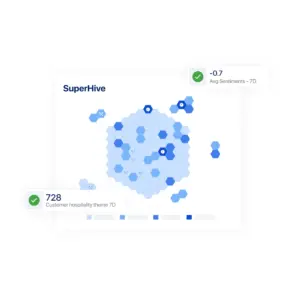
The SuperHive increases visibility into a contact center’s agent force with real-time and historical data. The real-time monitor is configurable with any metrics or conditions your contact center needs.
The SuperHive can show the status of what agents are doing when they are doing it. Contact centers can assign specific conditions to each agent and have a bird’s (or bee’s) eye view of what is happening within a contact center at any given time. Supervisors can see which agents are active, on calls or chats, on break, inactive, etc.
This helps with quality monitoring by reducing average talk time, hold time, and more. It also enables supervisors to identify agents who need additional training or targeted improvement. A recent customer highlight showed that the SuperHive reduced talk time by five percent with a 10 percent reduction in transfers.
Wallboards don’t need to be static metrics. They can evolve into digital powerhouses that empower contact centers to monitor, identify, and act using real-time and historical data. The modern wallboard can provide insight into every interaction and agent, ensuring each contact center “communicative dance” is one that creates a satisfying customer experience and increased customer loyalty.
Learn how the SuperHive can help improve your contact center’s Quality Monitoring.
The key drivers of adoption of CCaaS solutions are the desires to better enable customer and agent experiences, increase the availability and efficacy of customer self-service capabilities, and gain advanced insights into customer experiences both within and beyond customer service activities, according to the Gartner Magic Quadrant for CCaaS 2023. We would be remiss not to mention the growing excitement around generative AI, large language models (LLMs) and their ability to impact all three of the mentioned drivers, among others.
Up until now, CCaaS integration of generative AI and LLM technology has primarily been limited to conversation summarization capabilities. However, many CCaaS providers and independent software vendors adjacent to this market are actively developing capabilities that promise to address all of the three market drivers and more. This has tremendous potential for the operational customer service improvements that these solutions could bring. Gartner expects that these enhancements will largely augment agent activities within the five-year planning horizon and in doing so, increase CCaaS vendor revenue.
Meanwhile, organizations are increasingly looking to contact center as a service (CCaaS) and Workforce Engagement Management (WEM) providers to offer platforms that orchestrate and analyze seamless customer journeys to help agents support customers throughout the process and across all digital and voice channels.
This decade, applying artificial intelligence to various aspects of the customer journey has become a best practice in the industry and SuccessKPI is a vanguard of AI innovation to improve the customer (CX) and agent experience (AX). We have been quietly building intelligent functions for more than three years and just announced our AI Capabilities Portfolio and AI Roadmap. From 2021 through 2023, we have developed:
Recently we also introduced our newest capabilities: Forecast Traffic, Agent Assist and Call summarization.
Next, the addition of generative AI featuring large language models will raise employee productivity by reducing average handle times; improve the quality and accuracy of interactions by creating reusable knowledge content; and drive higher self-service containment rates through better conversational virtual agents.
Going forward in 2024, we plan to deliver a range of new generative AI capabilities such as generative intelligence, generative AI Expansion, Diagnose Topics and Intelligent Summaries that will make agents more productive and efficient, increase customer satisfaction and loyalty, and drive down the costs CCaaS operations, all securely, safely and in compliance with industry regulations.
Of course, responsible operators will weigh any perceived risks associated with using generative AI. At SuccessKPI, we have accounted for the security aspects in our development of AI in our labs. It was our first priority to make sure that not a single byte of data leaves customers’ accounts. Their data stays in the boundaries of their deployment. Any model training that we do is exclusively for that specific customer and their data is secure within their boundaries.
This is security within a private cloud. As part of our AI Pipeline process we follow this sequence of steps:
All of this happens within the customer’s private instance. Not many companies are fully aware of the security of data. For SuccessKPI, it’s not just the product and effectiveness of the product, but also the approach towards building the product that keeps customer data secure. It’s foundational.
Now with generative AI, these large language models are pre-trained with a lot of public data that could be limited or influenced by the particular search engine being used with that version of generative AI . What sometimes results from this is an AI “hallucination.” Customers, however, do not want their machine to hallucinate or recommend the wrong product because the LLM AI is trained on billions of data points outside just customer data. At SuccessKPI, we filter the data and make sure that the machine is aware of customer specific problems and domain and business and we do it securely. We are also making sure that these pre-trained models are not hallucinating and recommending something outside certain boundaries. This is important not only for accuracy but also for security.
The recent Forrester Consulting study commissioned by SuccessKPI “The Frustrating Journey to Cloud Contact Center Success” revealed some interesting insights about the adoption and optimisation of Cloud Contact Center-as-a-Service (CCaaS) across different global regions.
While contact centers across APAC, LATAM, and the EU/UK have diverse strategies and environments, the study revealed that 79% of respondents globally agree the right cloud toolset is critical to optimisation. Expected benefits of optimising with cloud toolsets include:
In addition, respondents expected to see reduced agent churn due to the improved agent and customer experience.
While a significant majority of contact centers surveyed in the United States (US) (58%) and United Kingdom (UK) (42%) have transitioned to the cloud, they fall behind in optimisation, which dramatically impacts contact center / CX performance.
Some of the reasons include:
There is much opportunity for businesses in these regions to bridge the gap for potential growth and efficiency gains. In fact, the UK contact centre market is projected to be growing at a CAGR of 7.6% from 2023-2031.
I have worked with hundreds of global contact centres and over the years I have seen a distinct approach in the UK to cloud contact center technology, balancing innovation with strategic optimisation.
“UK contact centres are still focused on increasing efficiency whilst improving both employee and customer experience. AI-powered solutions can deliver all these things and are top of mind in the UK.”
Steve Murray, CX Solutions Director at IP Integration

In Germany, Europe’s largest and most advanced technology market, the Forrester Consulting study revealed that while only 14% have not optimized their CCaaS solution at all, 57% have done so but still see room for improvement. Among the areas for improvement, 53% of respondents across Central Europe as a whole desire more timely triggered alerts to crisis situations.
Apparently the most challenging aspect to CCaaS in Germany is the migration from on-premise to cloud. Only one in three operators (33%) said their migration was completely successful, indicating the need for specialized assistance when moving to a cloud-based contact center.
“Customer expectations have changed and managing the Contact Center and Customer Service is becoming increasingly complex. Despite having a large amount of data, it is often difficult to quickly identify the true causes of issues and determine corrective actions to address them. By leveraging AI-based analysis of data, as speech & text analytics, we help clients to share information with cross-functional teams to find the best solution of contact center operations and enhance the customer experience.”
Corrado Pelligra, Partner and Co-Founder at Omega3C

Despite slower progress in optimisation, Latin America (LATAM) contact centres, reported the highest success rate in cloud migration of 63% in the Forrester study.
An example of cloud success is Multi, one of the most diversified consumer goods companies in Brazil with 28 in-house brands, 22 licensed brands, 9 partner brands, and a portfolio of 7,000+ product SKUs. They’re dedicated to delivering an exceptional experience for their end consumers. SuccessKPI has enabled Multi to gain a deep personalized understanding of customer experience at scale by leveraging speech, text, and sentiment analysis to capture the sentiment, topics, and issues from consumer interactions. Then they transformed that knowledge into an improved experience as well as actions and processes for their customers. Multi also leveraged automated quality management to move from monitoring just 1% of calls to a full 100%.
Hear first hand how Multi is delivering personalized experience at scale.
The State of CX: Asia Pacific report highlights the greatest challenges facing APAC companies’ customer experience function today are:
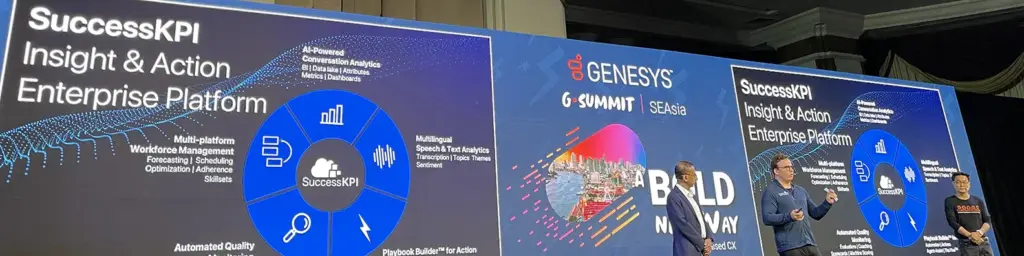
We heard conversations about these challenges on the ground at G-Summit SEAsia. Kulachart Ngernpermpoon from Genesys and I hit the stage to share some of the innovations National Telecom is bringing to CX. They are transforming their contact center operations with automated QM, reporting designed for smooth cloud migration, and implementing multi-language speech and text analytics.
Real-time business intelligence, automation, and sentiment analytics are among the most sought-after capabilities in CCaaS.
“There is much opportunity ahead for contact centers to optimise outcomes. There is much more value enterprises can achieve in the cloud when you leverage the right cloud toolset to efficiently transition to cloud and boost people with AI-powered tools and new skills—and these come with a compelling ROI.”
Dave Rennyson, CEO of SuccessKPI
The right cloud toolset is crucial for CCaaS success, as echoed by 79% of respondents globally. While contact centers across APAC, LATAM, and the EU/UK have diverse approaches, shared goals of optimisation are loud and clear in the cloud contact center industry.
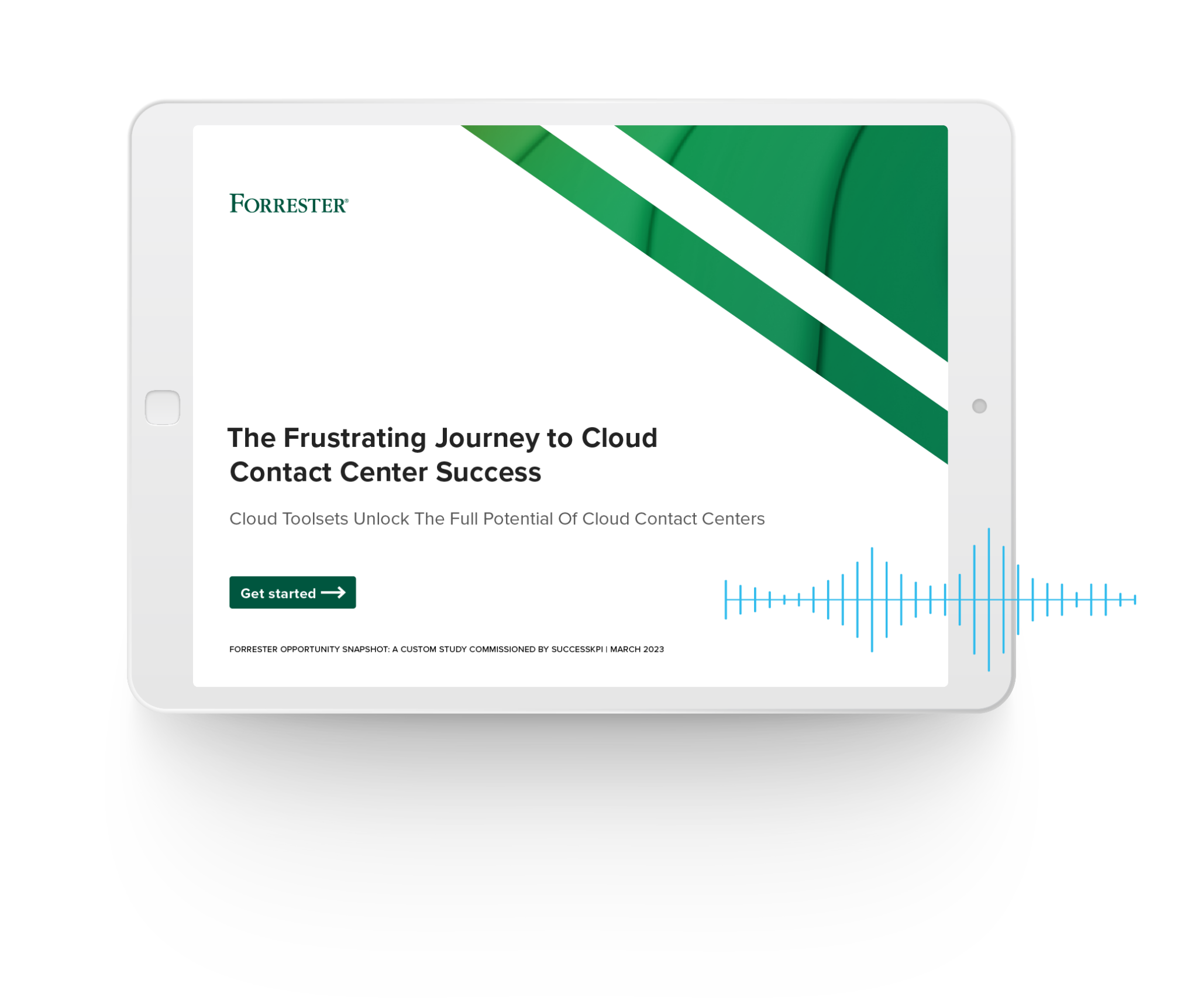
Conducted by Forrester Consulting on behalf of SuccessKPI, the commissioned study “The Frustrating Journey to Cloud Contact Center Success” indicates the move to the cloud has been a frustrating journey, and that cloud toolsets are essential to success in the cloud.
Download StudyThere is a saying that goes, “You can’t manage what you can’t measure.” This underlines the need for reports and data points that provide insights into your customers’ experiences and your contact center performance. On the surface that seems fairly straightforward. Within any contact center, there are basic key performance indicators (KPIs) that are measured as a means to gain insight into traffic, efficiency, peak volume, seasonality, and much more.
A standard set of reports and metrics are included as part of their built-in reporting in most contact center tools. And many offer users the ability to pick and choose the specific contents for each report by selecting from the list of available metrics. But BPOs need the ability to see and understand the full picture of the customer journey and contact center operations across data sources and platforms, and the ability to leverage exactly the metrics that measure and show value.
With the added complexity of serving multiple clients or divisions – each with their own unique set of requirements, operational goals, and data sources – the flexibility to report on whatever, whenever, and however can be a huge competitive differentiator. A large enterprise or BPO can gain a competitive advantage by providing not only exceptional contact center service and operational outcomes but also meaningful insight regarding customer experience and contact center performance.
Ask yourself this: are the standard metrics and data points you can select from your toolset able to capture enough insight for meaningful action? Are the pre-defined metrics from the drop-down list adequate given today’s complex cross-channel, cross-platform, holistic customer journey?
Take a look at something seemingly simple as average handle time or AHT. In simplest terms, AHT is a common metric that measures the average length of a call.
AHT is typically calculated using four core metrics:
Total hold time + Total talk time + Any afterwork → all divided by the total number of calls
At first glance this metric may appear sufficient as a performance indicator. At face-value it provides a high-level view of performance at any given point in time, typically when used to compare across other companies in your industry. However, this simplistic approach can be fraught, especially if you’re using it to make operational and business decisions across staffing, performance and validation of your approach to customer service.
What if you could modify the calculation of AHT itself to create a tuned metric that better reflects what you are trying to measure? In essence, changing the formula itself to better reflect what you want to measure.
For instance, if you are a contact center outsourcing company that supports clients in telecommunications and retail, you understand the factors that drive customer satisfaction and churn include first contact resolution, as well as the ability to self-serve. Imagine the value you could bring to your retail clients with the ability to create custom metrics – to tune the calculation of the metric itself to your specific industry and use case needs.
So instead of always using the standard calculation of AHT, it could include (or exclude) IVR transfers for secure credit card transactions for your retail customer; include or exclude transfers between departments when a single call included multiple purposes for your banking customer; or include data from integrations to applications such as Zendesk and Salesforce for your customer in telecom.
The possibilities are endless when you can not only customize your reports, but leverage powerful Business Intelligence to bring data sources together and splice and dice data any way you need. The added specificity and visibility can bring the meaningful insights needed to make critical business decisions and bring operational visibility.
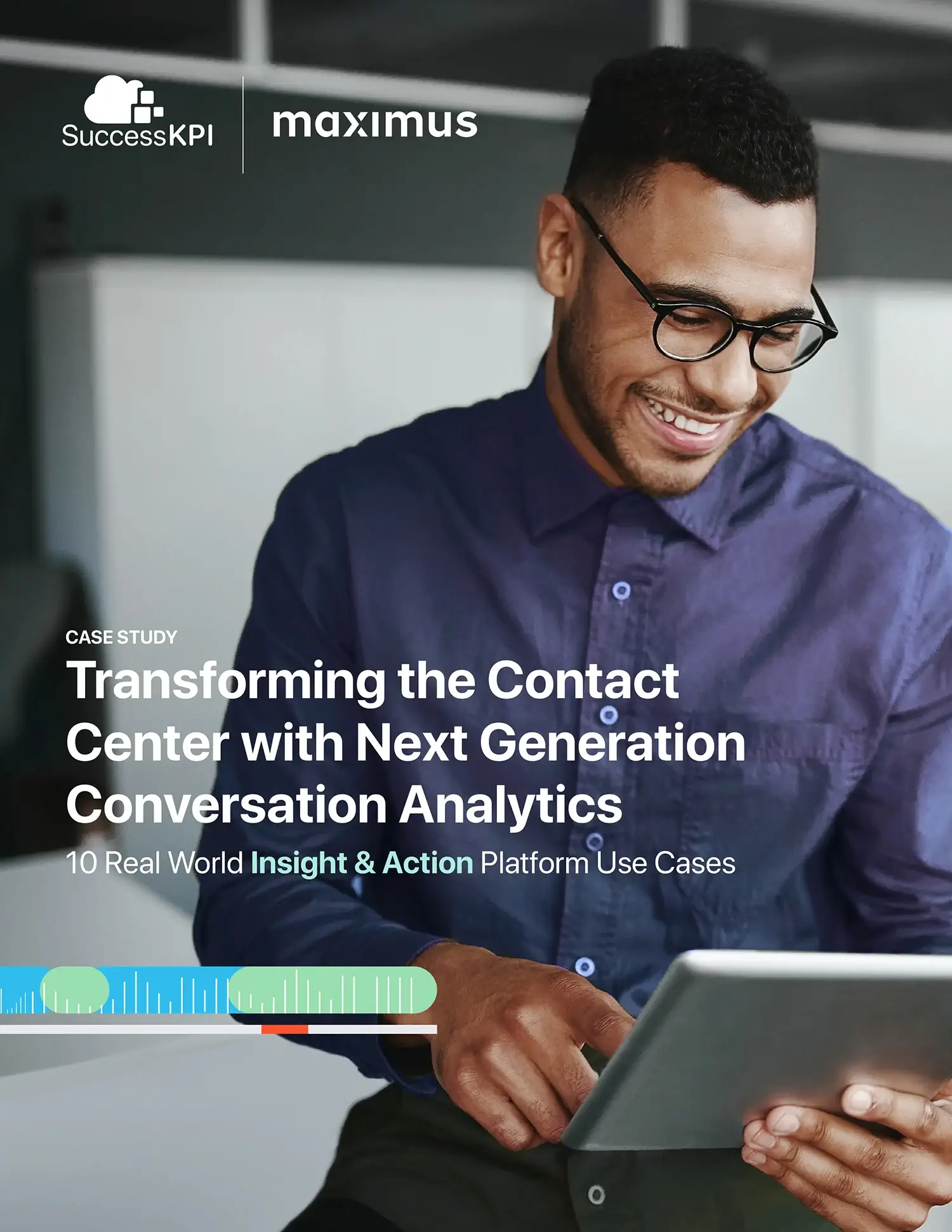
Featured in 10 use cases, see how Maximus leveraged SuccessKPI to stand up a 20k agent contact center that unified data from Genesys Cloud, a standalone instance of Amazon Connect for attendance tracking, Twilio, Microsoft Dynamics for CRM, Deltek for time recording, Workday for Human Resource and labor management. Each of these tools on their own has reporting, but leveraging SuccessKPI’s business intelligence platform, they were able to unify all the data into one single source of truth, providing incredible insights about operations, performance, and insights into conversations. What began as a data unification and reporting initiative powered by artificial intelligence quickly blossomed into dozens of high-powered use cases applicable to any large enterprise contact center.
Learn more about how SuccessKPI can support your contact center with custom metrics, quality measurements, speech & text analytics, and more.

In a post-pandemic world, enterprise leaders – from VPs of Experience to the C-suite visionaries – have faced tremendous transformation. And while remote, cloud-driven operations provide strategic advantages, data management persists as a critical solution area.
Consider “Agent Parker,” who is diligently managing a key customer’s requests from her cozy home nook. She is privy to her metrics and information. A layer above, “Supervisor Arkin” casts a wider net, overseeing data and performance matrices for all agents under his watch. Then, shift your gaze to “Director Dale” tasked with overseeing multiple business units while managing diverse client portfolios. Decentralization and holistic management are needed.
This complexity is not exclusive to BPOs who are known for managing complexities across their portfolios. Large enterprises face similar challenges. They must manage complex internal data dynamics while seamlessly integrating with their BPOs, who in turn are handling unique customer requirements, KPIs, and data sets. Think about aligning strategies for Customer X, while ensuring compliance for Customer Y, and delivering premium service for Customer Z.
Data is not what it used to be. It has evolved from static information to a living, breathing entity. Both enterprises and BPOs need an orchestra conductor for their data – ensuring each data point is harmoniously integrated and impeccably orchestrated across the customer journey and their systems.
Managing data is no longer just an IT task. It involves regional and industry regulations. From the stringent FedRAMP to GDPR, SOC2, and many more, trust is more than a virtue; it is an imperative for both enterprises and their BPO counterparts.
Data partitioning creates a framework for empowerment, clarity, and security. Whether an Agent, Supervisor, or Director, every role demands precision and protection. Data ensures each segment, each sector, and each stakeholder has its rightful place.
On one hand, there is the undeniable need for rigorous tech infrastructure, with robust data partitioning capabilities. On the other, it’s about fostering a culture of respect, responsibility, and restraint. It is about ensuring credibility at every layer, from granular data controls to ensuring full compliance with a plethora of regulations. But for the wider executive audience, it is also about understanding that with great data comes great responsibility.
SuccessKPI offers Data Partition as a feature to control data access to users based on certain job functions, department, business units, management unit, location, team, etc. In SuccessKPI settings, you can create and customize Data Partition to grant access to their own data within SuccessKPI analytics platform.
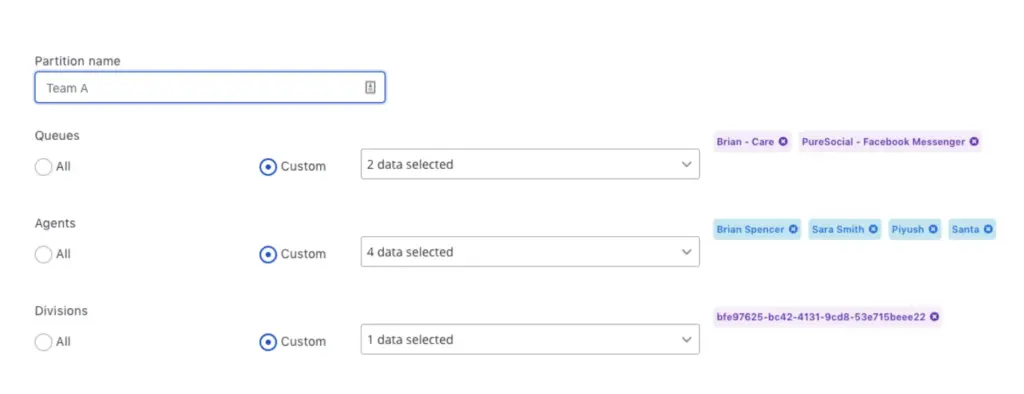
Here are a few examples of:
SuccessKPI’s Data Partition functionality is designed to simplify this complexity, empowering your organization with granular control over access for:
The out-of-the-box functionality is robust. The user-friendly interface allows for simple configuration for your specific needs.
Ready to define or hone your data management strategy? Dive in and harness the true power of precision with our robust Data Partition functionality. Ensure that every byte, every bit, every piece of data is in the right hands.
his article was originally published by ACT Today blog.
Customer experience is no longer a mere transaction–it transcends the entire sales and customer service journey, distinguishing a business from its competitors—or setting its reputation back considerably. However, this experience does not exist in a vacuum. It is intimately tied to the ‘total experience’—the blend of technology, employee interactions, and the customer journey.
In the digital age, customers expect to reach companies through multiple channels, including phone, email, chat, or social media. The best cross-channel experience leaders understand that delivering quality support across each channel is crucial to establishing a rapport that builds brand loyalty. A cross-channel understanding of total interactions with context is what enables transformative results.
A recent survey conducted by Gartner Peer Insights found that 55% of respondents feel emotionally connected with a business when they can reach customer care through multiple channels. This highlights the importance of meeting customers where they are and backing up each channel with quality support.
More digital channels mean more options for your customers to self-select how they engage with your brand and provide new ways for your business to reach customers where and how they prefer to be engaged.
While the focus is often on customer experience regarding cross channel complexities, it is equally crucial to acknowledge and address the experiences and impacts of customer care agents, who are an integral part of the digital revolution.
Agents are the heart of your contact center and the best connectivity you have to the customer. They represent and influence brand, experience, solutions, and much more. But often they must navigate multiple disparate systems and technologies to deliver service… on top of these challenges with virtual and hybrid roles where they can no longer lean over their cubical wall to ask a senior agent or supervisor a question. If their experience is fragmented and difficult due to siloed data and resources, this can negatively impact their ability to deliver a seamless customer experience. Technology enablement is critical not only for the customer experience but for the employee experience that ultimately shapes the customer interaction.
To build an effective strategy, we have to think about how these worlds combine: customers, employees, technology, and digital experiences. The total experience considers the concert of these combined elements, recognizing that the smoothness of agent experience with technology will directly affect the quality of the customer experience. This impacts your ability to drive customer satisfaction and improve critical KPIs.
Key findings from the 2022 CX Leaders Trends and Insights Report illustrate these challenges most customer care organizations face:
The Forrester Consulting study also highlighted that 70% of respondents said optimizing the performance of a cloud contact center is critical for business success. But due to cloud migration complexities, an even larger majority, 79%, indicated that the right cloud toolset is critical to making their cloud contact center perform to its potential.
Conducted by Forrester Consulting on behalf of SuccessKPI, the commissioned study “The Frustrating Journey to Cloud Contact Center Success” indicates the move to the cloud has been a frustrating journey, and that cloud toolsets are essential to success in the cloud.
Addressing these challenges with the right cloud-native toolset and experience-minded partners can power competitive advantage and outcomes-focused digital transformation. Moving your contact center tools and technology—your experience engine—into the cloud with the right toolset provides the opportunity for many incredible outcomes:
Wherever you are on your cloud journey, it is time to drive your contact center to its full potential and equip your team with optimization tools that help you make the most of your technology and resources. SuccessKPI is a revolutionary insight & action platform that uses AI, analytics, automation to remove the obstacles that contact center agents, managers, and executives face in providing a great customer experience. SuccessKPI’s platform and ACT’s Total Experience solutions are helping customers get cross-channel under control.
Ready to get started? Tell us about your upcoming project and our solutions consultants will scope out the best solution to meet your goals.