Table of Contents
Despite decades of innovation in contact center technology, many customer experience (CX) leaders are still wrestling with the same fundamental problems they faced years ago. Tools have changed. Platforms have evolved. But the operational challenges — visibility gaps, manual processes, fragmented data, and unanswered “why” questions — remain stubbornly persistent.
One of the most important lessons from recent internal CX enablement discussions is this: success in CX isn’t about adding more technology — it’s about solving the right problems, in the right order, with the right questions. Below are four key takeaways that reflect what leading organizations are doing differently to improve performance, reduce risk, and drive measurable outcomes.
1. The “Last Mile” of CX Is Where Performance Breaks Down
Many CX failures don’t originate in strategy or design — they happen at the edge. Audio quality issues, unstable connections, incorrect headsets, misconfigured environments, and remote work variability all contribute to what is often called the “last mile” problem.
What makes this especially dangerous is that organizations frequently don’t realize how widespread the issue is. When 15–20% of calls are affected by quality issues, the downstream impact is enormous: longer handle times, lower CSAT, repeat contacts, agent frustration, and missed revenue.
The takeaway: You can’t fix what you can’t see. CX leaders need real-time visibility into edge-level issues so supervisors can identify patterns, intervene quickly, and prevent small problems from becoming systemic ones. Operational awareness — not postmortem reporting — is what drives sustained improvement.
2. Manual Quality Management Doesn’t Scale — and Never Has
Quality management (QM) remains one of the most misunderstood areas of the contact center. Most organizations still rely on manual scorecards completed by supervisors or QA teams who are already stretched thin. The math simply doesn’t work: reviewing 1–3% of interactions cannot provide a reliable picture of agent performance or customer outcomes.
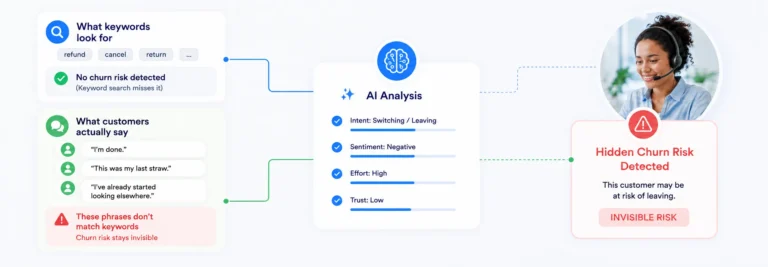
Generative AI has fundamentally changed what’s possible here. Instead of sampling conversations, organizations can now analyze 100% of interactions, using AI-driven prompts to assess behaviors, compliance, conversion moments, and customer sentiment.
The key insight isn’t that humans should be removed from QM — it’s that human effort should be applied where it adds the most value. Automated QM provides scale and consistency; human reviewers provide calibration, coaching, and judgment.
3. More Dashboards Don’t Equal Better Decisions
Modern contact centers generate an overwhelming amount of data — but that data is often scattered across tools, dashboards, and reports that don’t speak to one another. Leaders end up spending more time reconciling metrics than acting on them.
A growing best practice is to move away from “report-first” thinking and instead design command-center views aligned to specific operational goals. Rather than asking, “What data can we pull from the platform?” successful teams ask, “What decisions need to be made today — and what signals support those decisions?”
This approach enables real-time intervention, whether that’s identifying struggling agents, detecting compliance risks, or recognizing emotionally intense interactions where agents may need immediate support. The takeaway is clear: operational intelligence beats static reporting every time.
4. The Hardest CX Questions Are Usually “Why” Questions
leaders are often asked to explain why. Historically, answering those questions required hours of manual analysis and educated guesswork.
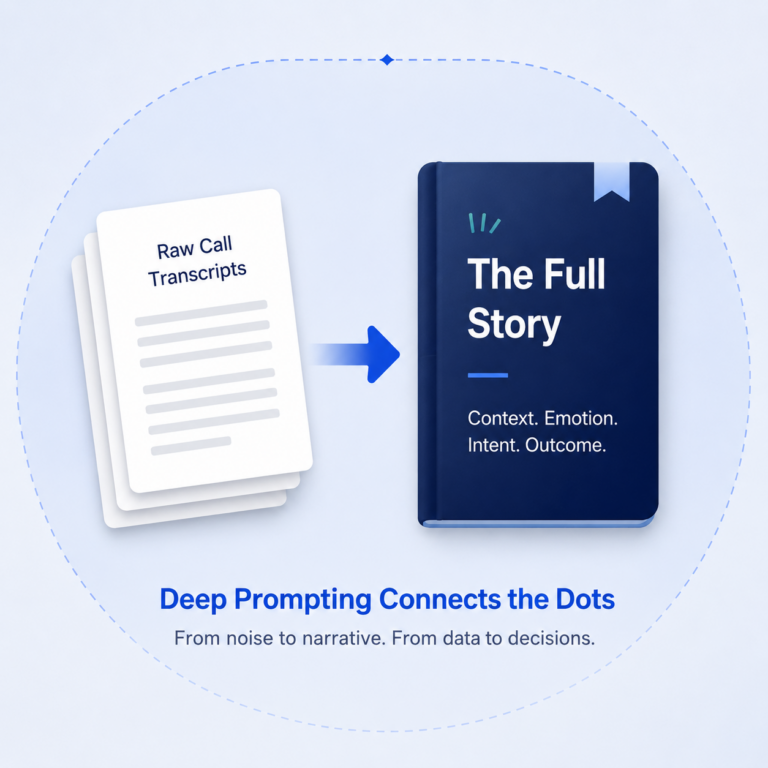
A more effective approach is hypothesis-driven CX analysis. Start with a specific problem. Identify the data needed to diagnose it. Use AI, speech analytics, and interaction-level insights to isolate the moments that matter — not entire calls, but the exact points where outcomes changed.
This allows teams to move from surface metrics to root cause understanding. And while technology can accelerate insight, the real work still happens afterward: updating training, refining processes, and aligning teams around corrective action.
The lesson here is important: technology doesn’t solve CX problems on its own — but it makes solving them possible.
Bringing It All Together
Across all four takeaways, a common theme emerges: high-performing CX organizations focus less on tools and more on problem clarity, operational visibility, and disciplined execution. They ask better questions, surface issues earlier, and act faster — not because they have more data, but because they have the right data, structured around real business objectives.
In a world where CX expectations continue to rise, the advantage belongs to teams that can move from insight to action with speed and confidence. Solving the right problems — and doing so systematically — is what separates incremental improvement from real transformation.