Table of Contents
Agents like AI! But Why? Find Out How to Implement, Build Trust, and Deliver Results
A Webinar Discussion on AI, Employee Experience, and Customer Outcomes
Press play above to watch the full webinar.
The contact center industry is undergoing a fundamental shift. No longer viewed solely as a cost center, today’s contact centers are becoming the frontline of customer experience and brand differentiation. But here’s the paradox: as customer expectations rise, so does agent burnout and churn.
A recent webinar brought together industry experts to tackle this critical challenge: How can AI improve agent satisfaction, reduce turnover, and ultimately deliver better customer experiences? Here’s what they discovered.
The Changing Role of the Contact Center Agent
Ankita Singh, Industry Principal at Frost and Sullivan, opened the discussion with compelling research on how the agent’s role has fundamentally changed over the past three to four years.
“Contact center agents have really evolved,” Singh explained. “What’s driving this change? First, there’s a significant shift in employee expectations. Agents are no longer just seeking compensation. They want well-being, flexibility, empowerment at work, growth opportunities, personal alignment with their jobs, and continuous, transparent performance management.”
The context is clear: contact centers are no longer processing queries—they’re creating customer loyalty, driving upselling opportunities, and building brand awareness. This means agents need more sophisticated skills, better tools, and greater support than ever before.
The Crisis: Agent Churn is Real
The numbers tell a sobering story. Singh’s research found that 44% of companies report 20% or higher agent attrition rates, with some experiencing even worse turnover. The cost is staggering: when experienced agents leave, businesses lose not just the employee, but significant institutional knowledge and continuity.
Key drivers of agent burnout and churn include:
- Emotionally charged conversations
- Mundane, repetitive work
- Poor work-life balance
- Remote work challenges
- Lack of recognition and training
- Stress from constant monitoring
“All of these factors combine to create a crisis that’s impacting customer service quality,” Singh noted.
The Direct Link Between Agent and Customer Satisfaction
Terry Lang, Director of Customer Success at Edcor (which provides student loan and scholarship assistance), brought a real-world perspective to the conversation.
“Agent satisfaction and customer experience are very closely linked, and it’s probably more important now than ever,” Lang said. “In voice channels, tone has always been an indicator of agent satisfaction—customers can perceive and mirror that tone. But with the growth of chat, SMS, and social media, tone is conveyed differently, and it’s easier for dissatisfaction to come through.”
Lang gave a practical example: “If you’re having a pleasant conversation and say ‘have a nice day,’ the customer can tell you’re having a nice day. But if you say that during a difficult conversation, it could be perceived as sarcasm or disdain. It’s really important to get that right.”
This insight underscores a critical reality: agent satisfaction isn’t just a nice-to-have—it directly impacts customer perception and brand loyalty.
What Businesses Are Getting Wrong
Mike Ahnemann, VP of Customer Success at Success KPI, posed a crucial question: Where do companies go wrong when implementing AI to support their agents?
Singh identified several critical mistakes:
1. Lack of Change Management “There’s not enough awareness and training when AI-powered tools are introduced. Many companies underestimate how important it is to prepare their teams for these transitions.”
2. Focusing on Wrong KPIs “Companies often continue measuring average handling time even after implementing AI. But when agents are equipped to handle more complex queries, this KPI becomes meaningless. The ROI must be viewed through the lens of agent experience and customer quality, not just speed.”
3. Over-Automation “There’s a real risk of automating too much. Businesses need to balance automation with maintaining the human touch that customers still crave. It’s about human-in-the-loop approaches, not replacing humans entirely.”
4. Ignoring the Voice of Employee “Agents are the ones using these tools. If companies don’t listen to agent feedback about technology implementation, adoption will fail. The voice of the agent must be part of purchasing decisions and iterative improvements.”
The AI Solution: Meeting Agents Where They Are
Dave Rennyson, CEO of Success KPI, brought clarity to how AI can genuinely improve agent experience and reduce stress.
“One of the most compelling insights from research is around training,” Rennyson explained. “I once took a public speaking course where the professor said the number one way to reduce stress and anxiety is to be an expert in your subject. The same principle applies to agents. When they have the knowledge, tools, and training needed to do their jobs, stress plummets.”
Quick Wins to Get Started
Rennyson recommended starting with automated quality management as the first AI implementation priority:
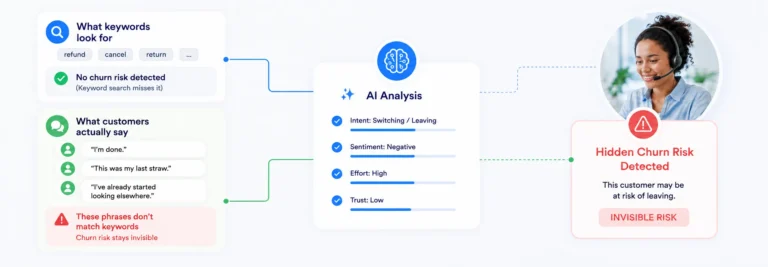
“Traditional quality management has been based on sampling—maybe reviewing 1-5% of calls. With AI, you can analyze 100% of interactions in near real time. This shifts focus from just coaching individual agents to understanding what’s actually happening in your contact center: What are new trends? What questions are hard? What could be automated? Which interactions lead to agent or customer dissatisfaction?”
The benefits are threefold: it’s more cost-effective than traditional QM, it immediately raises awareness of what’s happening in real conversations, and it identifies where agents need support.
The Human-AI Balance
Crucially, Rennyson emphasized that automation must respect the human element: “We talk about deploying a ‘performance platform for agentic and human CX.’ This means studying the work in your contact center, identifying good candidates for automation (typically shorter, more frequent tasks), and then building bridges to human agents when calls transfer. The agent needs context about what happened before, why automation might have failed, and how to jump in and finish the transaction.”
What Great Agent Experience Looks Like
Lang offered a practical framework for what successful agent experience entails:
“Leaders are looking at the holistic experience. That means a clean, comfortable, inviting workspace—whether that’s remote or on-premises. It means providing flexibility in scheduling and policies. It means automating away the easy answers so agents can focus on complex issues. And it means providing instant feedback—agents now expect real-time feedback on their performance, just like we all get with social media and other platforms.”
Balancing Monitoring with Trust
A key tension in contact centers is balancing performance monitoring with agent empowerment. Lang addressed this head-on:
“We’ve got to stop playing ‘whack-a-mole’ with quality management. For years, this meant finding problems in tiny samples of calls, which did nothing but degrade trust. But AI allows us to provide real-time feedback based on 100% of calls, so we can identify both positive and negative aspects and provide context with actual quotes. Agents can now take charge of their performance rather than dreading the quality meeting next week.”
Real-World Results: AI-Driven Agent Satisfaction
Lang shared concrete results from Edcor’s AI implementation:
“For the past four years, we’ve used AI to monitor 100% of our calls, examining 13 different dimensions of call compliance—proper greetings, closings, empathy, politeness, and more. We attached this to post-call customer satisfaction ratings and deliver a balanced scorecard to agents every morning showing how they’re performing and how it affects their CSAT.”
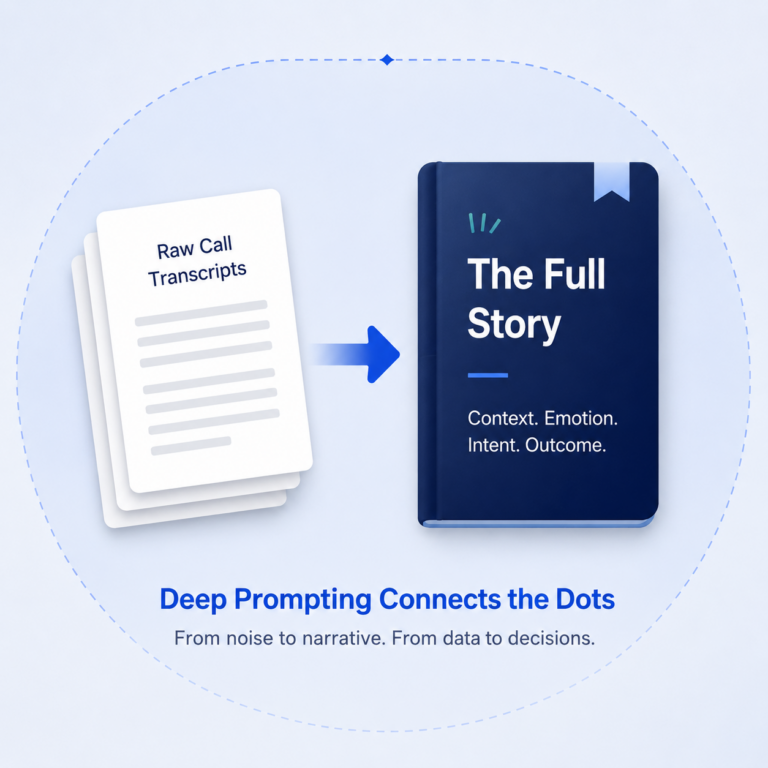
But they didn’t stop there. “More recently, we’ve leveraged generative AI with deep prompts to examine calls, and now we’re giving agents not just coaching, but context-based teaching. We’ve even implemented quarterly bonuses for hitting quality metrics, reinforcing the behaviors we want to see.”
The result? Measurable reductions in both agent churn and customer dissatisfaction.
The Three-to-Five Year Outlook
As the discussion wrapped up, the panelists offered predictions for the future of AI in contact centers:
Singh’s Vision: Agent Experience as a KPI
“I believe agent experience will become an important KPI for contact centers in the next few years. This incorporates voice of employee, how AI tools are being used, how ROI is measured, and whether companies are using change management properly. We’re moving toward a world where agent experience isn’t an afterthought—it’s central to success.”
Singh also predicted accelerated investment in:
- Intraday scheduling (though carefully balanced to avoid disruption)
- Advanced coaching delivered through AI (moving from reactive to proactive, personalized development)
Lang’s Perspective: Information-Pushing
“Customers increasingly expect agents to know why they’re calling before they even connect. Over the next three to five years, agents will demand more sophisticated information-pushing capabilities. The speed and thoroughness of information delivery will only increase.”
Rennyson’s Reality Check
“The future is here, just not evenly distributed. Agentic conversations will handle significant call volumes, but far fewer than people think. It’s taken a long time for each generation—VRUs, IVRs, IVAs, now agentic AI—to mature. The real need going forward will be governing and managing these conversations and maintaining the human-agentic loop that will continue to be central to contact centers.”
The Bottom Line
The conversation revealed a fundamental truth: AI isn’t about replacing agents—it’s about empowering them.
When implemented thoughtfully—with proper change management, agent input, and a commitment to the human element—AI can:
- Reduce agent stress by ensuring they have the knowledge and tools they need
- Improve customer satisfaction by enabling agents to deliver personalized, contextual service
- Decrease agent churn by creating a workplace where agents feel supported, valued, and empowered
- Drive business outcomes by making contact centers genuine competitive advantages
The companies winning in this space aren’t the ones deploying the most AI. They’re the ones deploying AI in service of their people—both agents and customers.
Webinar Participants:
- Mike Ahnemann – VP of Customer Success, Success KPI
- Ankita Singh – Industry Principal, Frost and Sullivan
- Terry Lang – Director of Customer Success, Edcor
- Dave Rennyson – CEO, Success KPI
For more information or follow-up questions, contact: hello@successkpi.com